LIMBO
- 4.4
- Rating
- 1.00M
- Installs
- $0.40
- Price

 Analysis by App-foxy
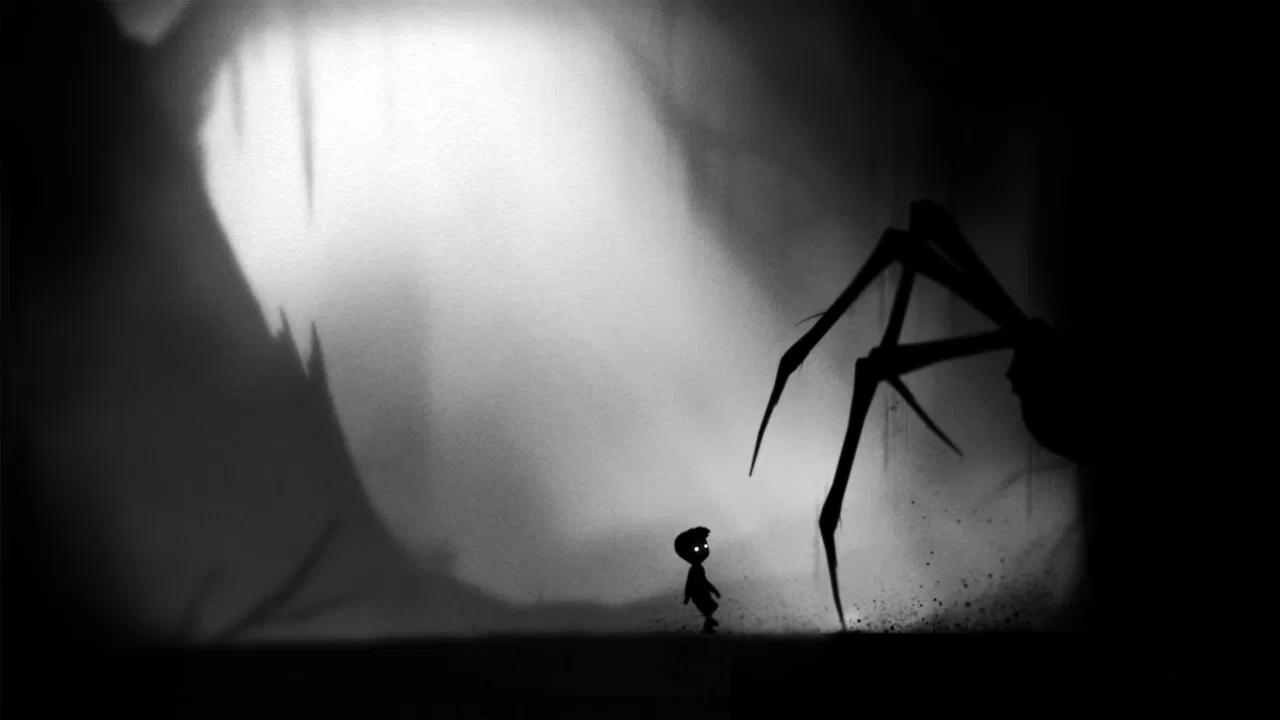
LIMBO is the kind of adventure game I would recommend when you want something focused, quiet, and a little unsettling rather than a long, noisy action experience. I played it as a compact journey built around atmosphere, observation, and carefully timed movement. Its central setup is simple: a boy enters a strange black-and-white world while uncertain about what happened to his sister. The game gives that premise room to breathe, using silence and visual clues instead of lengthy explanations.
That simplicity is also the reason it stands out. This is not an adventure filled with dialogue trees, collectible-heavy maps, or a large cast explaining every objective. I was usually left to examine the scene, test an idea, and accept the consequences when I had misunderstood something. The result feels closer to an interactive nightmare than a conventional platform game, but it remains approachable because its controls and goals are easy to understand.
How the game feels to play
At its core, LIMBO combines side-scrolling movement with environmental puzzles. I guide the boy through hazards, machinery, traps, and spaces that often look harmless until the game reveals their danger. Progress depends less on fast reflexes than on noticing patterns. A suspicious object, a change in lighting, or an oddly placed platform can be the clue needed to move forward.
You May Also Like

 AccuWeather: Weather Radar
AccuWeather Review: A Quick, Clear Forecast for Everyday Decisions
For everyday plans, the best forecast is the one you can understand quickly. AccuWeather makes rain timing, radar, and local conditions easy to act on, with a few trade-offs.

 Hill Climb Racing
Why Hill Climb Racing Still Turns Crashes Into One More Run
A tiny car, a bumpy hill and one more upgrade: Hill Climb Racing keeps resurfacing because its simple chaos makes every near-miss feel personal.

 AliExpress - Shopping App
AliExpress Makes Global Shopping Feel Personal, but Shoppers Bear the Risk
AliExpress turns a global marketplace into a pocket-sized discovery engine. Its reach is useful, its shopping loop compelling, and its trade-offs easy to miss.

 Lords Mobile: Kingdom Wars
Lords Mobile Is a Kingdom-Building Routine, Not a Quick Match
A case-by-case verdict on the building, battles, device demands, and social commitments that make Lords Mobile rewarding for some players and exhausting for others.

 PDF Scanner app - TapScanner
TapScanner Makes Paperwork Easier to Capture, Check, and Share
TapScanner makes scanning with a phone feel less like a rescue operation and more like a dependable step in getting work done. Its capture tools are useful, though not flawless.

 Block Blast!
 Shows How Much a Puzzle Game Can Leave Out
A quiet grid game shows why puzzle players increasingly value instant clarity, repeatable skill and low-pressure play—and where the genre still needs to catch up.
More From Our News Desk
View All News


The visual style does much of the storytelling. Almost everything is reduced to silhouettes, shadows, and muted shapes, so small movements become important. A distant figure, a hanging object, or a change in the background can create tension without a spoken line. I found myself paying attention to the edges of the screen because the game frequently communicates through composition rather than instructions.
The absence of conventional explanation is deliberate, but it can also be demanding. If you prefer clear objectives and frequent confirmation that you are doing the right thing, this approach may feel vague. I enjoyed interpreting the world, although there were moments when I had to stop and reconsider whether I had missed a visual cue or simply needed to experiment more.
The puzzles are strongest when they make ordinary scenery feel suspicious. A box, a lever, a rope, or a pool of water can all become part of a larger problem. The most useful habit is to look at the entire screen before moving. Rushing toward the obvious route is often exactly what the game expects you to do before revealing why that route is unsafe.
One practical tip made a noticeable difference for me: when a solution seems impossible, I stopped trying to force the main character forward and instead tested what could be moved, activated, or used as a timing tool. Many situations are solved by changing the order of actions rather than finding a hidden item. That makes the game satisfying for players who like reasoning through a scene, but less appealing to anyone looking for constant forward momentum.
Failure is part of the design. The boy can die suddenly, sometimes because a trap is deliberately difficult to read on the first attempt. I did not see those moments as a problem when the game quickly showed me what had gone wrong. The trial-and-error structure works best when I treated each failed attempt as information: watch the timing, identify the trigger, and try again with a different plan.
That said, the same structure can frustrate players who dislike repeating a short section. LIMBO does not soften every mistake with a generous tutorial or a detailed explanation. It expects patience and observation. If you want an adventure where failure is rare and progress is mostly automatic, this is probably the wrong choice.
Atmosphere that rewards headphones and attention
The sound design is one of the main reasons I would avoid treating this as a casual background game. Quiet stretches are interrupted by mechanical noises, movement in the darkness, or sounds that suggest danger before I could see it. Playing with headphones made the spaces feel more immediate, especially when the screen offered very little visual information.
The game’s darkness is not only an artistic effect. It controls what I know and when I know it. A bright object can become a visual landmark, while a barely visible shape may be a warning. This makes the experience more personal than a typical puzzle platformer because I was constantly deciding whether to trust what I could see.
I also appreciated that the atmosphere does not depend on a large amount of text. There is no need to remember a complicated backstory before understanding the immediate goal: survive the next area and keep moving. At the same time, the broader meaning remains open to interpretation. Players who enjoy discussing symbolism and endings will find more to think about than players who want every mystery explained directly.
What the purchase gives you
The listed price is $0.40, so this is a paid game rather than a free download supported by an entry barrier of zero. That distinction matters when deciding what value means here. I would not judge it by the amount of content found in a large free-to-play title; I would judge it as a small, self-contained experience that asks for a modest one-time purchase.
For that price, the appeal is the complete style of the experience: the stark presentation, the compact puzzle structure, and the unusual emotional tone. I would be comfortable recommending it to someone who wants a focused game for a quiet evening, particularly if they already know they enjoy atmospheric platform adventures. The value is less convincing for someone who measures a purchase by replay variety, extensive customization, or endless updates.
Its audience size suggests that the game has reached well beyond a niche group. It carries a 4.4 average from around 83 thousand ratings and has passed one million installs, which gives me useful context without changing the personal question: whether its particular mood suits you. Popularity cannot make a deliberately obscure puzzle feel clearer, but it does show that the unusual presentation has connected with a broad mobile audience.
The game is marked for teens, which fits the darker atmosphere and threatening situations. I would not choose it as a cheerful family game for younger children. A teenager who enjoys suspense may appreciate it, but sensitivity to disturbing imagery and sudden danger is worth considering before handing it to someone who expects a light platformer.
Playdead is the developer behind the game, and the presentation feels unusually controlled from beginning to end. The current version is 1.27, with Android support starting at version 6.0. If you are checking an older device, the operating-system requirement is the practical detail to verify first. A compatible phone or tablet is more important here than raw specifications because the experience depends on seeing subtle shapes and reacting to movement without the display getting in the way.
Where it fits among adventure games
Compared with a typical mobile adventure game, LIMBO is much less interested in dialogue, inventory management, and branching choices. There is no sense that I am collecting a large set of tools to build a character or manage a long quest. Instead, each area presents a visual problem, and the solution usually comes from reading the environment.
Compared with a conventional platformer, it is slower and more cautious. Fast movement can be useful, but careful timing and experimentation matter more than chaining impressive actions. Players who prefer bright colors, upbeat music, and immediate rewards may find the monochrome world too restrained. Players who enjoy games that let silence create tension may find that restraint refreshing.
It also differs from free mobile games that encourage short repeated sessions through daily rewards or competitive progression. I would play this when I wanted to concentrate on one crafted journey, not when I wanted a game that could occupy a few seconds while waiting in line. A realistic use case is an evening commute or a quiet break with headphones, provided you are willing to pause and think rather than play on autopilot.
Another important trade-off is replay value. I found the first journey more compelling because the puzzles and visual surprises were unknown. After learning the solutions, some of the mystery naturally fades. You can revisit it for the mood or to notice details you missed, but I would not buy it expecting the long-term variety of a procedural game, a competitive title, or an adventure with multiple routes.
Small habits that improve the experience
I recommend playing with the screen brightness set so dark shapes remain visible without washing out the contrast. The game depends on silhouettes, and a display that is too dim can make a puzzle feel unfair. A display that is too bright can also weaken the atmosphere, so a comfortable middle setting works better than simply choosing the brightest option.
It is also worth resisting the urge to search for a solution immediately. When I was stuck, I first watched the scene for a few seconds without touching anything. Some hazards reveal themselves through motion or sound, and that observation often saved more time than random attempts. This is a useful distinction from many mobile puzzle games: the answer is frequently in the timing and arrangement already visible on the screen.
When a sequence involves a moving hazard, I learned to plan the return route before triggering it. Advancing is not always the hard part; getting back to a safe position can be. Thinking one action ahead reduces repeated deaths and makes the puzzles feel more deliberate. It is a small change in approach, but it turns the game from trial-and-error into a process of testing a theory.
For players who dislike losing progress, the checkpoint structure is worth experiencing before making a judgment. The game is designed around retrying nearby situations rather than treating every mistake as a major setback. Even so, I would still avoid playing while distracted. Missing one visual cue can lead to a sequence of failed attempts, not because the controls are complicated, but because the game expects full attention.
Who should spend the money
I think the strongest audience is someone who wants an atmospheric adventure with environmental puzzles and a mysterious story told indirectly. It is a good fit for players who enjoy studying a scene, experimenting with objects, and accepting that the game will not explain every idea in plain language. It also suits people who prefer a finite, focused experience over an app built around constant rewards.
It is less suitable for players who need frequent dialogue, explicit objectives, or a bright and energetic tone. I would also skip it if your main goal is competitive play, character progression, open exploration, or a large collection of side activities. The game’s value comes from how tightly it controls its mood, and that same focus limits what you can do outside its intended path.
Parents should pay attention to the teen age guidance rather than assuming that a simple control scheme means a child-friendly experience. The boy’s vulnerability, the threatening environments, and the sudden deaths are central to the tone. For a mature teenager, those elements may be exactly what makes the game memorable; for a younger or sensitive player, they may be uncomfortable.
It is also a sensible choice for a player who is new to atmospheric puzzle adventures because the basic interaction is easy to grasp. You do not need to learn a large control system before understanding the first challenge. However, newcomers should know that accessibility of controls does not mean the game will always be easy. The difficulty comes from interpreting situations and timing actions, not from mastering a long list of buttons.
My buy-or-skip verdict
I would buy LIMBO at its listed price if I wanted a short, distinctive adventure and was comfortable with a dark, sometimes unsettling mood. The purchase makes sense because the game offers a carefully shaped experience rather than trying to imitate a free service with endless repetition. The best value is in its atmosphere, puzzle design, and focused presentation—not in quantity.
I would skip it if I wanted a relaxing game that can be played without concentration, or if I expected a large adventure with dialogue, upgrades, and many optional activities. Its silence can feel powerful one moment and vague the next. Its deaths can teach useful lessons, but they can also test the patience of anyone who dislikes repeating a sequence.
For me, the balance comes down to whether the mood is part of the reason I play. LIMBO is not merely a platformer with dark colors; its visual restraint, sound, and uncertainty shape every decision. I found that combination more memorable than a more conventional adventure, even when it made me work harder to understand what the game wanted.
With a release date of February 11, 2015, it has had time to establish its identity, and the current mobile version keeps that identity centered on the original kind of experience rather than turning it into a feature-heavy product. My final recommendation is straightforward: choose it for a concentrated, eerie puzzle journey, use headphones if possible, and give it your attention. If that sounds appealing, the low paid entry makes it an easy recommendation. If you need constant action or clear explanations, another adventure game will serve you better.
FAQs for LIMBO
01What kind of game is LIMBO?
LIMBO is a dark, atmospheric puzzle-platformer focused on exploration, timing, and environmental problem-solving. You control a young boy moving through a monochromatic world filled with traps, physics-based puzzles, and unsettling surprises. The game tells its story with almost no dialogue, so players discover its meaning through the environment, visual details, and carefully designed encounters rather than traditional cutscenes or written explanations.
02Is LIMBO suitable for children?
Although LIMBO uses a simple silhouette-based art style, it is not necessarily intended for young children. The game contains frightening imagery, dangerous traps, implied violence, death scenes, and a consistently disturbing atmosphere. Its content is presented without graphic realism, but some sequences may still be upsetting. Parents should check the official age rating and consider the child’s sensitivity to suspense and horror before downloading it.
03Does LIMBO require an internet connection to play?
LIMBO is primarily a single-player offline experience, so an internet connection is generally not needed after the game has been downloaded and installed. This makes it convenient for playing during travel or in areas with limited connectivity. Internet access may still be required for the initial download, updates, account verification, or platform-specific services, depending on whether you are using Android or iOS.
04How difficult are the puzzles in LIMBO?
LIMBO begins with relatively straightforward challenges, but its puzzles gradually become more demanding as new hazards and mechanics are introduced. Success depends on observing the environment, experimenting with objects, and learning from mistakes. Some traps are intentionally unexpected, and trial and error is part of the design. Players who prefer fast action may find the slower, logic-focused progression challenging but rewarding.
05Is LIMBO worth downloading on Android or iOS?
LIMBO is worth considering if you enjoy atmospheric indie games, minimalist storytelling, clever platforming, and puzzle-solving. Its haunting art direction, immersive sound design, and compact structure create a memorable experience that works especially well on mobile devices. However, players seeking multiplayer features, extensive character customization, or a long role-playing adventure may find the game too brief and deliberately simple.
Pros
- Atmospheric black-and-white art creates a memorable visual identity.
- Simple controls make the platforming easy to learn.
- Environmental puzzles reward observation and experimentation.
- Short chapters keep the experience focused and free of filler.
- Immersive sound design makes quiet moments feel tense and meaningful.
Cons
- Some puzzles rely on trial and error rather than clear visual clues.
- Deaths can feel repetitive when replaying sections after a mistake.
- The monochrome visuals may be difficult to distinguish on small screens.
- Its brief length may feel expensive compared with longer platformers.
- The bleak tone and unsettling imagery may not suit every player.

LIMBO
Gallery